ShipsBy Cruise Frog Editorial
Disney Cruise Line's official youth-club page places Oceaneer Club at ages three to ten, Edge at eleven to fourteen, and Vibe at fourteen to seventeen. That makes the children's ages a useful starting point before parents plan an adults-only dinner or expect siblings to spend the evening together.
A family-friendly ship can offer many activities without putting every child in the same supervised group. Check the arrangements for your actual ship and sailing, including participation requirements, registration and the current schedule. An age range alone does not describe every detail a child needs to feel comfortable.
Plan for each child separately
List each child's age on the trip and the activity they would enjoy. A younger sibling may want familiar company while an older child may welcome a separate space. Discuss that expectation before turning the club into the main plan for the evening.
Use the Disney Cruise Line directory and Disney Wish page for fleet context. The Disney Treasure page helps compare another ship. Verify the actual youth facilities and arrangements rather than assuming ships with the same brand have identical spaces.
Check birthdays and overlapping ranges
Put birthdays beside the sailing dates. Ask the line how a birthday during the cruise affects the child's participation. Do not interpret an overlapping published age as a guaranteed free choice of any group on any day.
If keeping siblings together is central to the vacation, ask about the actual options before paying for arrangements that depend on it. Consider family activities outside the supervised clubs as well. A joint afternoon can be enjoyable even if the children choose different evening programs.
Our family cruise guide helps frame the wider plan. The youth-club planning guide covers questions about sessions and an adults-only evening on another line. Its Royal Caribbean details should be kept separate from Disney's own terms.
Leave the first visit flexible
Allow time after boarding to learn the arrangements and let the children see the relevant space. Follow the staff's instructions about registration, entry and collection. A dinner booked around an assumed club session can become stressful if the family has not tested the routine.
Check how parents can be reached and agree who will collect each child. A ship app may help with the daily program, but keep a simple meeting plan too. Do not make every evening depend on the children feeling the same way about participation.
The dining-calendar guide helps compare meals with other plans. The connecting-cabin guide addresses the room setup that can also shape a family's evening. A suitable club is one piece of the trip, not a substitute for suitable accommodation.
Keep the travel before the ship manageable
Use Lounge Frog’s airport directory for the flight side and Points Frog’s program directory for a hotel stay if needed. A tired arrival day is a poor test of whether a child will enjoy an entire cruise program.
The best family plan leaves room for both independence and shared time. Check the current ages and requirements, choose a workable evening routine, and keep an enjoyable alternative if a child wants to stay with the family.
Photo credit
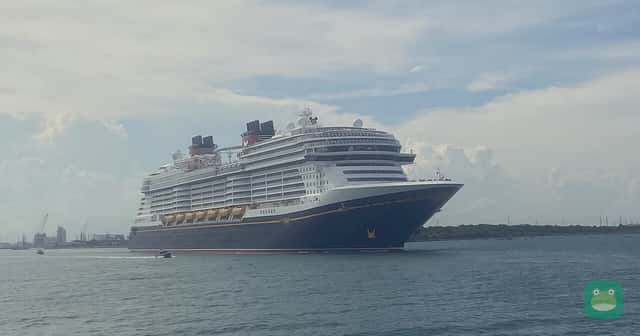
Disney Wish departing Port Canaveral in September 2026: Jack Adamenko, CC0 1.0, via Wikimedia Commons. Cropped and resized; representative ship photograph.
Sources and date checked
Checked October 14, 2026. Disney’s official youth-club age ranges.
Photo: Disney Wish departing Port Canaveral in September 2026; representative ship photograph, cropped and resized; CC0 1.0 · Jack Adamenko, CC0 1.0, via Wikimedia Commons