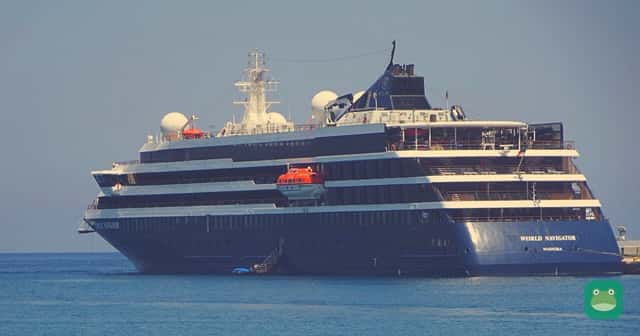
An expedition ship is one of the best places in the world to travel alone, and one of the worst places to feel alone. Everyone on board is there for the same reason. Everyone piles into the same Zodiacs, pulls on the same parka and comes back from the same penguin colony with the same stupid grin. On a ship of 200 guests, that shared purpose does the work a singles mixer never could. Atlas Ocean Voyages understands this. What it does not do is make the booking cheap.
Three yachts, one shape
Atlas runs three near-identical ships: World Navigator, World Traveller and World Voyager. Each is just under 10,000 tons and carries about 200 guests, which is small even by expedition standards. They are polar-rated, with ice-strengthened hulls, and they spend the northern winter in Antarctica on round trips from Ushuaia. The rest of the year they sail the Mediterranean, Atlantic Europe, Iceland, Svalbard and Greenland on what the line calls Epicurean and cultural expeditions. World Voyager spends the 2026 to 2029 Antarctic seasons on charter to another operator, so for polar trips the choice is between the other two.
The look is modern yacht rather than research vessel. Every cabin has a balcony or a suite footprint, with marble bathrooms and heated floors. The fare includes drinks, 24-hour room service, gratuities and a parka to keep on polar voyages. There is a small spa, a sauna with an ocean view, and a low Water's Edge deck for watching wildlife at eye level.
The honest part: no single cabins
Atlas has no cabins priced for one. Back in 2021 the line announced Solo Suites for World Navigator, and they drew a lot of attention at the time, but they no longer appear among its suite categories. What exists today is an offer, not a cabin type.
That offer is called Single Explorer Savings. On select voyages, a solo traveler pays a reduced single supplement that starts at 150 percent of the per-person double-occupancy fare. In plain terms, you pay one and a half fares to have a double cabin to yourself. The offer is capacity controlled, which means the line opens it on sailings that need to fill, and it can close without notice. It excludes air, shore excursions and pre- or post-voyage land programs. At the time of writing the booking deadline is December 31, with fares due to rise in early January.
Is 150 percent a good deal? Compared with lines that charge the full double fare, yes. Compared with river lines that waive the supplement, no. On an Antarctic voyage where the per-person fare runs well into five figures, the extra 50 percent is real money. The upside is that the fare is close to all-inclusive, so there are few surprises after you board.
How a solo traveler actually spends the day
On a polar voyage the day is built around landings. Two a day in good weather, in small groups by Zodiac, with the expedition team pointing out seals, whales and penguin rookeries. You are never doing this alone, and the people in your boat become your people by the end of the first week. Lectures from the expedition team fill the sea days across the Drake Passage.
Dining is open seating in the main restaurant, Porto, with a smaller grill, 7Aft, on the back deck that needs a reservation and seats guests at shared tables. Atlas runs no formal solo program, no hosted table and no scheduled meetups, and its solo page says only that guests meet others over dinner and on shared excursions. On a ship this size, that is enough. Nobody sits alone at the bar for long unless they want to.
The Mediterranean and Atlantic Europe voyages are quieter in this respect. Without landings to bind the group, a solo traveler relies more on the small-ship rhythm of cocktails before dinner and the included excursions in port. They still work well, but the Antarctic trips are where traveling alone on Atlas really shines.
Who it suits
Atlas suits a solo traveler who wants Antarctica or the Arctic with real comfort, who values a small ship over a big expedition team, and who can afford a supplement of 50 percent on an already premium fare. It also suits a food-minded solo guest on a summer Mediterranean sailing who wants a yacht atmosphere without the yacht price.
It does not suit anyone hunting for a single cabin or a no-supplement deal. Travelers for whom polar science is the point sometimes prefer the long-established specialist lines with bigger expedition staffs. And if you want a hosted solo dinner every night, the line simply does not offer one.
How to work the system
Ask about Single Explorer Savings on the specific sailing you want before you fall for it, because the offer is not on every departure. Aim for shoulder dates in the Antarctic season, when the line is likelier to need the cabin. Book inside the current deadline. And remember that the included drinks, tips and parka make the headline number closer to the final bill than on most ships, which for one person paying the whole thing matters a great deal.
Sources: Atlas Ocean Voyages, "Single Explorer Savings" (https://atlasoceanvoyages.com/offer/single-explorer-savings); Atlas Ocean Voyages ship and suite pages; Atlas Ocean Voyages press release of June 21, 2021 on the former Solo Suites.
More onAtlas Ocean Voyages