Start with the itinerary, not the ship
The reason a solo traveler ends up on Costa Cruises is usually geography. Costa's Mediterranean ships run week-long loops all year that can be joined at Savona, Genoa, Civitavecchia for Rome, Naples, Marseille, Barcelona and Palma, among others. If you live in Europe, you can take a train to the port on Saturday morning and be at sea by dinner. No flight, no hotel night, no transfer. For someone traveling alone, cutting the logistics in half is worth a great deal, and it is the main thing Costa does better than lines that need you to fly to Miami.
The second reason is price. Costa is a mainstream line with mainstream fares, and seven nights in the Western Mediterranean in the shoulder season can be remarkably cheap, even after the solo supplement.
The honest part
Costa has no cabins built for one. Its categories run from inside to balcony to suite, all for two or more, so a solo guest books a double cabin and pays a single supplement. The percentage varies by sailing and fare type, and the line has run reduced single-occupancy promotions on selected departures over the years rather than a permanent policy. There is also no hosted solo program, no solo cocktail hour and no solo table. If a cabin for one and a scheduled meetup are your must-haves, this is the wrong line, and it is better to know that now.
What you get instead is a very large, very sociable ship and a dinner arrangement that does the work for you.
Which ships
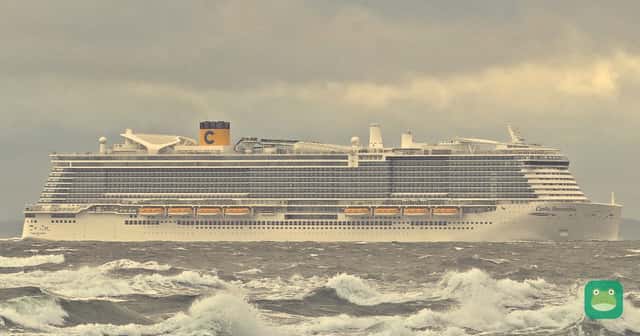
Costa's eight ships break into two groups. The two Excellence-class ships, Costa Smeralda and Costa Toscana, are 185,000-ton LNG-powered giants carrying more than 5,000 guests, with a multi-deck atrium styled as an Italian piazza, a dozen bars and the line's full set of restaurants. They are busy, loud and fun, and a solo traveler who wants to disappear into a crowd and then reappear at a bar will like them. The older Concordia-class ships such as Costa Pacifica and Costa Favolosa, and the smaller Costa Deliziosa at 2,260 guests, feel more traditional and easier to learn. Deliziosa, which spends much of the year on long voyages and world cruises, draws an older and more patient crowd that suits a solo traveler who wants conversation over a long dinner.
Whichever ship, expect a crowd that is heavily Italian with large French, Spanish and German contingents, announcements in several languages, and an onboard rhythm that runs later than American ships: aperitivo at seven, dinner at nine, the show after that.
Dinner is the strategy
Costa seats main-restaurant dinner at assigned tables in two sittings, and this is the single best thing it does for solo travelers. Ask when you book, or at the restaurant desk on the first afternoon, for a large shared table, and you will have the same six or eight companions every night. On a Costa ship that table will be multinational, and a solo traveler with a little Italian or French goes a long way. The waiters notice the odd one out and tend to look after them.
The buffet is open for a quiet lunch, and the newer ships have a long list of specialty venues, from the Archipelago restaurant with menus by three Michelin-starred chefs to sushi, teppanyaki and pizza counters, most of them with small tables and counter seats where eating alone is unremarkable. Drinks packages are sold with the fare, and for one person who will spend time at the bar, the drinks-included fare is often the better buy.
Meeting people the Costa way
The entertainment team runs a packed program by the pool and in the atrium: dance lessons, quizzes, karaoke, Italian-themed evenings and a lot of music. None of it is aimed at solo travelers, and all of it works for them, because the point is participation. The shows are visual and musical rather than word-heavy, which suits a mixed-language crowd. Shore excursions run in big groups, and on a seven-night loop with six port days, you will spend a lot of time on the same buses with the same people.
Who it suits and who should look elsewhere
Costa suits a European solo traveler, or a visitor already in Italy, who wants a cheap and lively Mediterranean week, likes a shared table, and does not mind a ship where English is one of five languages. It is especially good as a first cruise for someone who would rather be among people than alone with a book.
It does not suit a solo traveler who wants a single cabin, a hosted program, a quiet ship or an English-only environment. Nor is it the pick for anyone who wants to sail from the United States; Costa's cruises start in Europe, South America and the Caribbean islands. Price the sailing for one before you book, pick a smaller ship if the crowds worry you, and ask for the big table on night one.
Sources: Costa Cruises, ship and cabin pages and general booking conditions (https://www.costacruises.com); Costa Cruises dining and onboard program pages.
More onCosta Cruises